

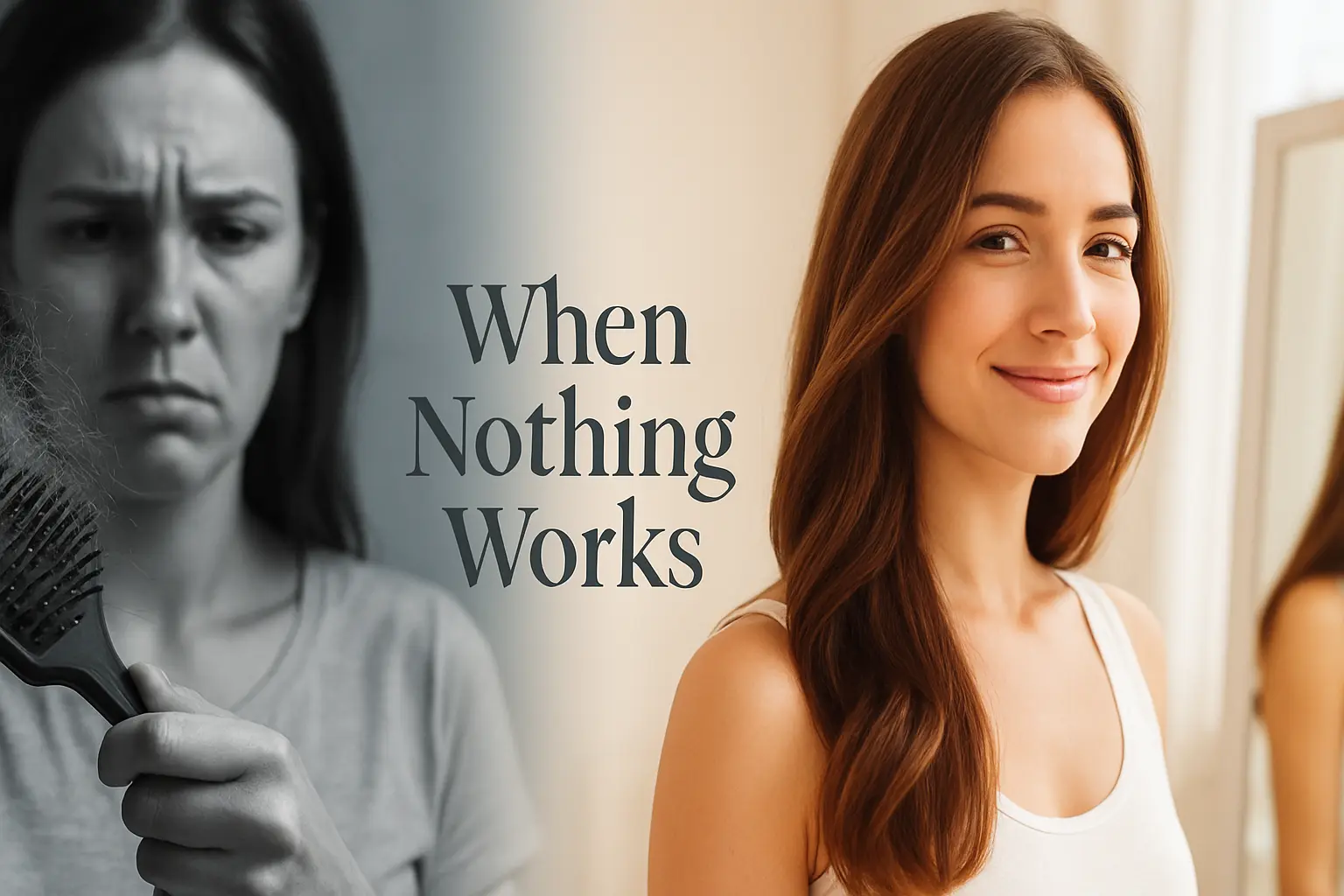

When Nothing Works
"I've tried everything and it feels like nothing I do works,"
Lucia wrote to us from Spain, her frustration echoing through every word.
"I lose over 250 strand of hair a day, I can see my scalp, and I'm afraid to stop using minoxidil because I might lose even more."
Sound familiar?
Lucia's story mirrors thousands of women who've spent years—and often thousands of dollars — chasing solutions for chronic hair problems that seem impossible to solve.
They've tried expensive salon treatments, prescription medications, countless supplements, and every "miracle" product on the market.Yet their hair keeps falling out in clumps.
Their scalp keeps showing through. Nothing works.
Here's what we've discovered after helping over working with over 91,000 women with chronic hair concerns like this:
The real problem isn't your hair.
It's our hair follicles that are stuck in a bad cycle...
And specifically, it's a condition experts in the field are only beginning to understand: hair follicle dysfunction.
What Is Hair Follicle Dysfunction?
Hair follicle dysfunction occurs when the tiny organs in your scalp that produce hair become compromised, damaged, or "leaky" — losing their ability to create healthy, robust strands.
Think of your hair follicles as sophisticated biological factories.
Each one is designed to:
- Produce keratin (the protein that forms your hair)
- Regulate the hair growth cycle
- Maintain proper blood flow and nutrient delivery
- Protect against environmental toxins
- Support the stem cells that regenerate new hair
But here's what happens when these follicular "factories" start breaking down:
The Three Types of Follicular Dysfunction
1. Compromised Follicles
- Reduced metabolic activity
- Decreased stem cell responsiveness
- Impaired nutrient uptake
- Early signs of hair miniaturization
2. Damaged Follicles
- Visible hair thinning and weakness
- Altered follicular structure
- Compromised blood supply
- Inflammatory infiltration
- Disrupted cellular communication
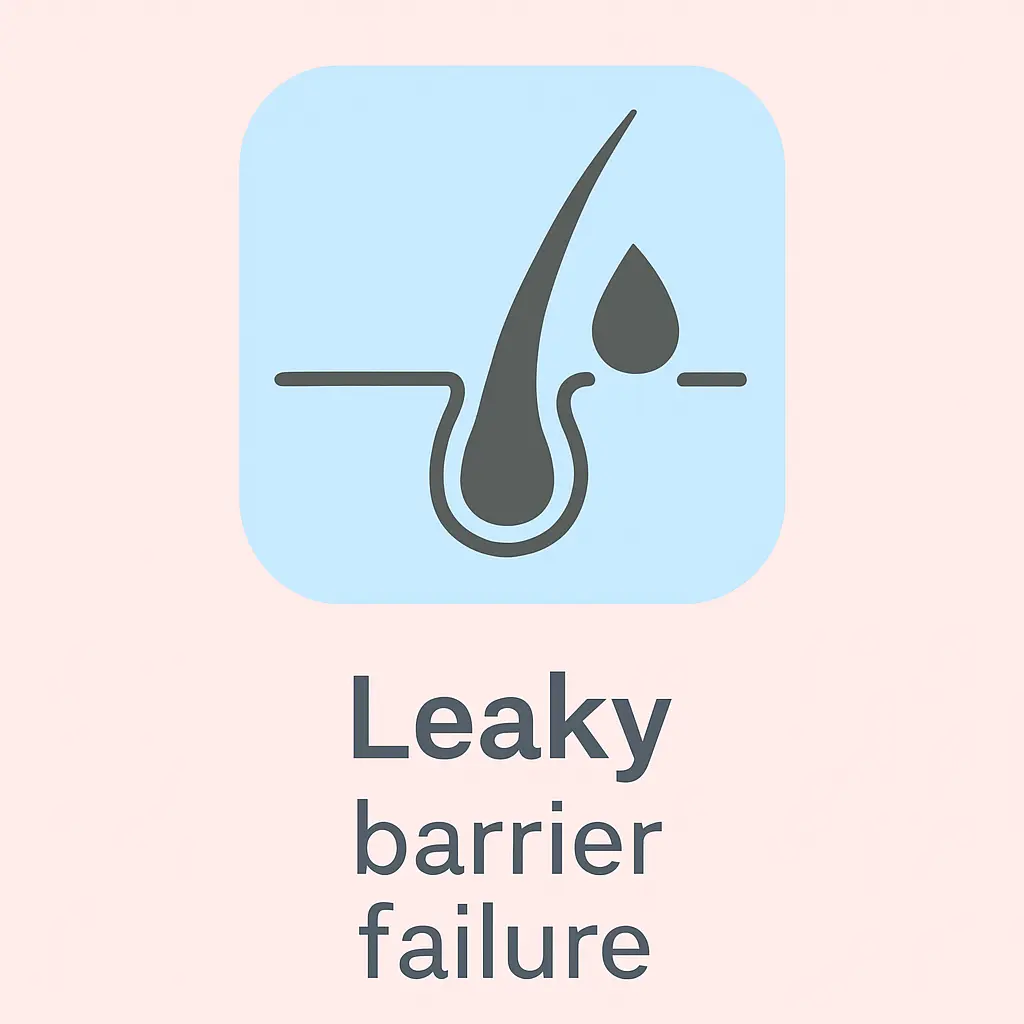
3. Leaky Follicles (Emerging research)
- Compromised barrier function
- Increased permeability to toxins
- Loss of selective nutrient uptake
- Impaired retention of growth factors
- Altered follicular pH and microenvironment
How Healthy Follicles Should Function
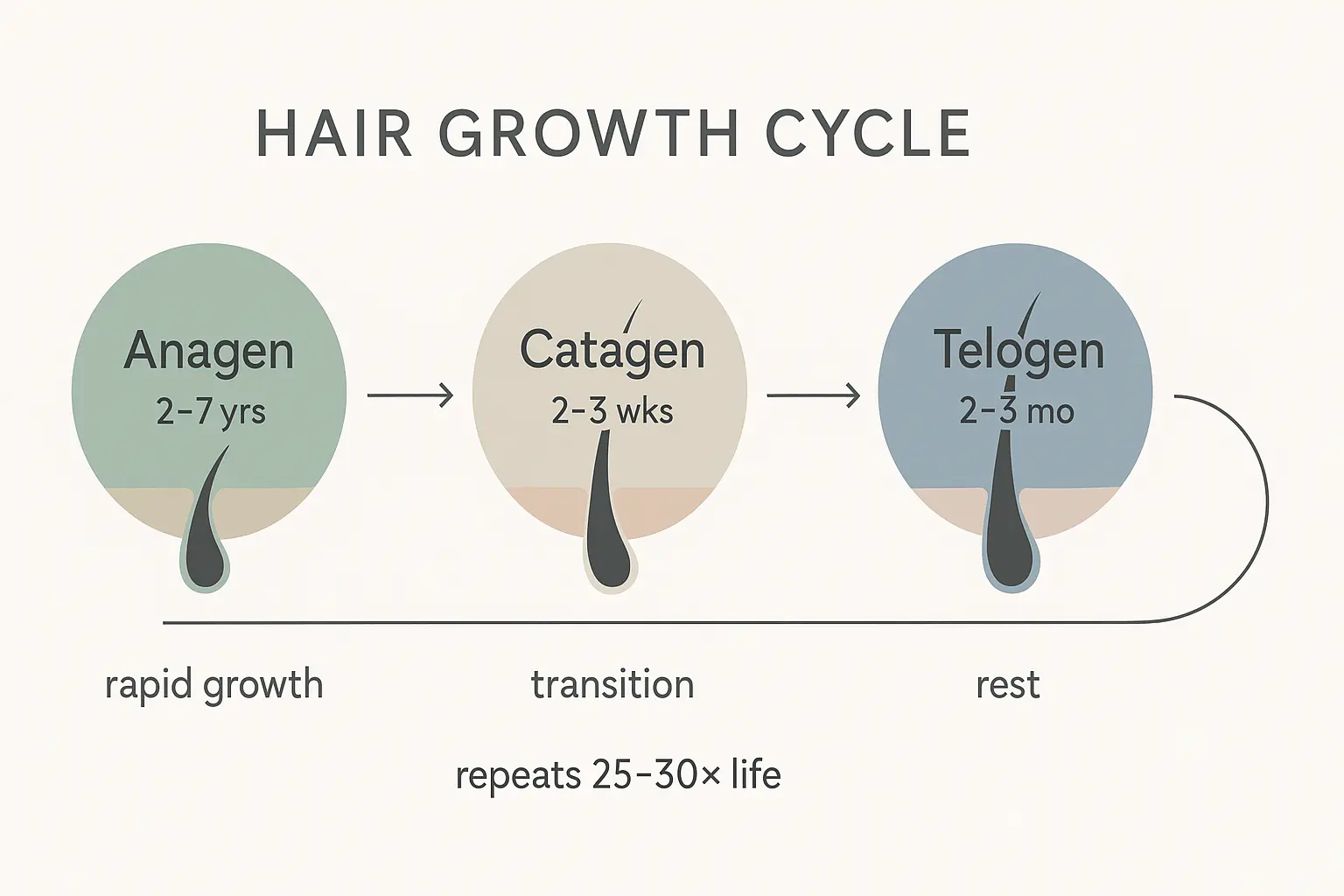
In optimal health, your hair follicles operate like precision instruments:
- Anagen Phase (2-7 years): Rapid cell division and hair growth
- Catagen Phase (2-3 weeks): Transition and follicle shrinkage
- Telogen Phase (2-3 months): Rest period before new cycle begins
A healthy follicle can repeat this cycle 25-30 times throughout your lifetime. But when dysfunction sets in, cycles become shorter, growth phases diminish, and eventually follicles can become dormant or die entirely if you don’t take action once the diagnosis is confirmed.
The Science Behind Follicular Breakdown
Recent research has identified several key mechanisms that drive hair follicle dysfunction:
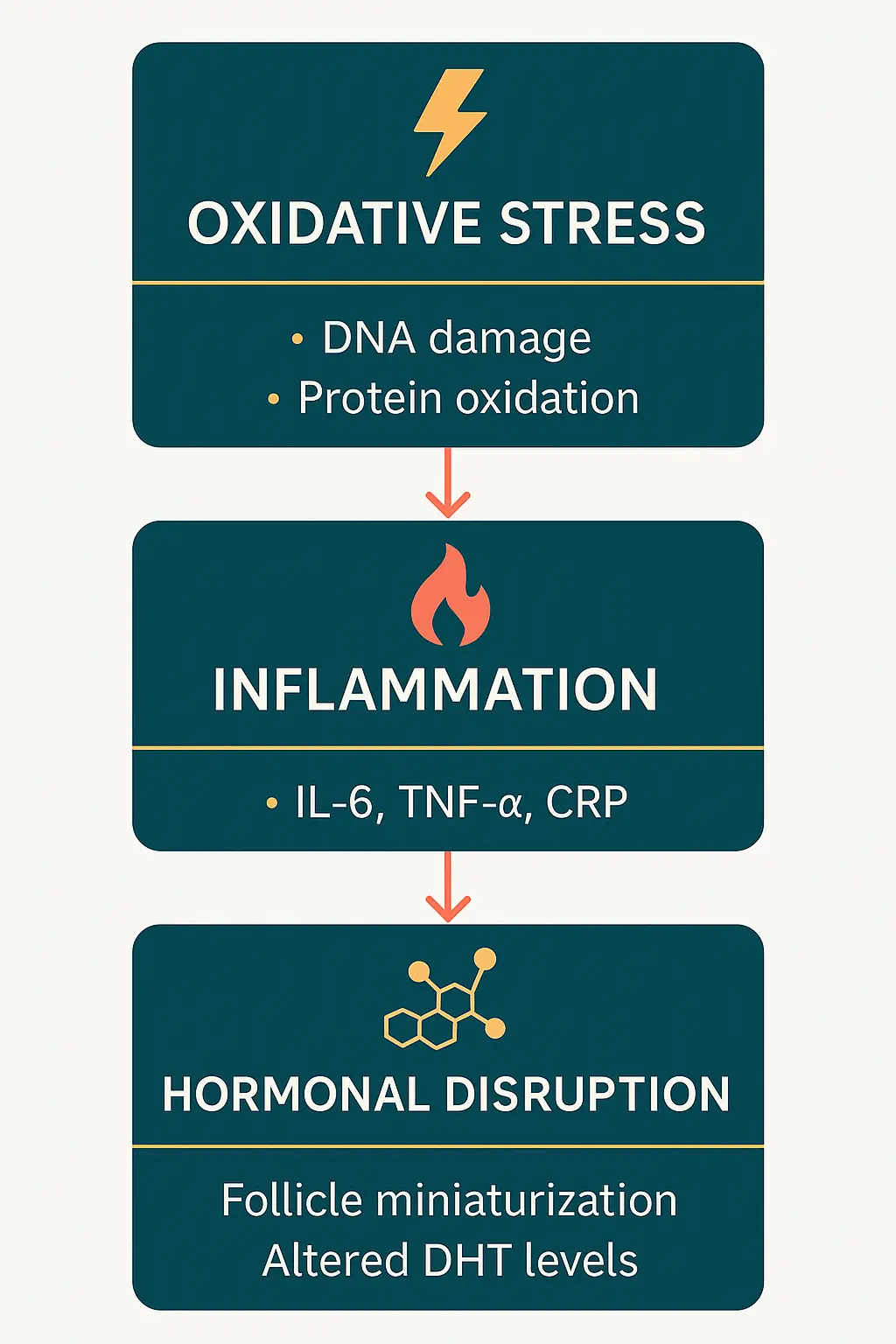
Oxidative Stress and Free Radical Damage
The Problem:
Your follicles are under constant attack from reactive oxygen species (ROS)—unstable molecules that damage cellular structures.
What Research Shows:
A 2020 study published in the International Journal of Molecular Sciences found that oxidative stress is a primary driver of follicular aging and dysfunction, leading to:
- DNA damage in follicular stem cells (= damage to hair growth system)
- Protein oxidation affecting cellular machinery (= breakdown of hair-building proteins)
- Lipid peroxidation damaging cell membranes (= cell walls get holes, killing hair cells)
- Mitochondrial dysfunction reducing cellular energy (= less power for hair growth)
Inflammatory Cascades
The Problem:
Chronic low-grade inflammation creates a hostile environment for follicular function.
What Research Shows:
According to research in Dermatology Research and Practice, inflammatory processes trigger:
- Release of pro-inflammatory cytokines (IL-1β, TNF-α) (= body sends "attack" signals that hurt hair follicles)
- Activation of destructive enzymes (= scissors that cut up healthy hair proteins)
- Impaired wound healing and regeneration (= slower hair follicle repair)
- Disruption of normal cellular signaling pathways (= hair cells can't receive "grow hair" messages)
Hormonal Disruption Pathways
The Problem:
Hormonal imbalances, particularly elevated DHT (dihydrotestosterone), directly attack follicular health.
What Research Shows:
Studies in the Journal of Clinical Medicine demonstrate that hormonal dysfunction leads to:
- Follicular miniaturization (= no baby hair growth)
- Shortened anagen phases (= reduced growth)
- Increased follicular sensitivity to androgens (= hair loss)
- Progressive hair shaft diameter reduction (= hair thinning)
7 Warning Signs Your Hair Follicles Are Dysfunctional
Based on our analysis of hundreds of thousands of customer surveys, here are the most common signs of follicular dysfunction:
1. Hair Loss That Won't Stop
"I lose a lot of hair every day, clumps falling out" - Survey respondent
- More than 100-150 hairs lost daily
- Hair comes out in clumps during washing
- Visible thinning despite using treatments
2. Scalp Visibility
“It’s gotten to the point where you can see my scalp without needing any bright light.” - Paula, Challenge participant
- Widening part lines
- Visible scalp in bright lighting
- Areas where hair appears "see-through"
3. Hair That Breaks at the Roots
"I was sure that my hair had stopped growing" - Survey respondent
- Short, broken hairs around the hairline
- Hair that snaps easily when touched
- Lack of new growth despite healthy lifestyle
4. Loss of Hair Texture and Quality
"My waves are gone, now it's a frizzy mess" - Sophie, Challenge participant
- Previously thick hair becoming fine and weak
- Loss of natural curl or wave pattern
- Hair that won't hold styles anymore
5. Products Stop Working
"I've tried everything and it only gets worse" - Victoria, Challenge participant
- Treatments that once worked become ineffective
- Constant need to try new products
- Temporary improvements that don't last
6. Scalp Issues That Persist
"My hair gets oily after a day and then there is constant itchiness after wash days" - Kirstine, Challenge participant
- Chronic scalp irritation, itching, or sensitivity
- Persistent dandruff or flaking
- Hair / scalp that gets oily fast
- Scalp that feels tight or uncomfortable
7. Emotional Impact on Daily Life
"I don't leave the house unless I need groceries" - Katherine, Challenge participant
- Avoiding social situations due to hair appearance
- Constantly wearing hats or hair tied up
- Feeling like hair problems control your life
Self-Assessment: If you've experience one or more of these signs in the last 6 months, your hair follicles may be dysfunctional and in need of targeted intervention.
The Root Causes Behind Follicle Dysfunction
Understanding why follicles become dysfunctional is crucial for effective treatment. Based on scientific research and our work with thousands of clients, here are the primary contributors:
Environmental Toxins and Chemical Damage
The Hidden Assault:
Your follicles face daily exposure to harmful chemicals that accumulate over time.
Common Sources:
- Wrong use of sulfates and harsh detergents in shampoos
- Synthetic fragrances and preservatives
- Microplastics and endocrine disrupting ingredients
- Heavy metals in water supply
- Air pollution and environmental toxins
- Chemical hair treatments (perms, relaxers, frequent coloring)
How They Damage Follicles:
According to research published in Environmental Health Perspectives, environmental toxins can:
- Disrupt hormonal signaling pathways
- Increase oxidative stress and inflammation
- Interfere with nutrient absorption
- Damage follicular DNA and cellular structures
Nutritional Deficiencies That Starve Follicles
The Foundation Crisis: Your follicles require specific nutrients to function optimally.
Critical Deficiencies We See:
- Iron deficiency: Affects oxygen transport to follicles
- Protein insufficiency: Impacts hair structure formation
- B-vitamin deficiencies: Disrupt cellular metabolism
- Essential fatty acid deficiencies: Affect cell membrane integrity
- Vitamin D deficiency: Impairs follicular stem cell function
Research in the Journal of Clinical and Aesthetic Dermatology shows that nutritional deficiencies can directly cause follicular dysfunction and hair loss.
The Supplement Trap: When "More" Becomes Harmful
The Overconsumption Crisis: In desperation to restore follicular health, many fall into the supplement trap—believing that if some nutrients are good, more must be better.
The Reality Research Reveals:
- Biotin megadoses: Despite widespread use, a 2017 systematic review published in PMC found "no proven efficacy in hair and nail growth of healthy individuals" and noted that biotin supplements "might interfere with some lab tests." High-dose biotin therapy can produce "significant interference in all tested assays" and may cause false-positive or false-negative laboratory results.
- Iron overload: Research shows that "excess iron significantly induced oxidative stress, promoted apoptosis" and that "iron overload modulates follicular microenvironment via ROS/HIF-1α signaling." High ferritin levels can indicate "chronic inflammation, and inflammation is no friend to your follicles" while creating "oxidative stress that damages hair follicles."
- Oxidative stress cascade: Multiple studies confirm that "oxidative stress is an important factor causing hair loss" and that "oxidative stress caused by mitochondrial dysfunction may contribute to hair loss."
The Follicular Consequence: Research published in the Journal of Cellular and Molecular Medicine demonstrates that "oxidative stress induces oxidative damage to hair follicles and interferes with the hair cycle causing pathological hair loss."
The Hidden Danger: A 2024 review found that "only 6.6 percent of biotin users were aware of the FDA warning and only 4 percent were informed of potential laboratory interference by their physician," meaning most people taking supplements are unaware of potential risks.
Chronic Stress and Cortisol Overload
The Silent Destroyer: Chronic stress creates a cascade of hormonal changes that damage follicles.
How Stress Attacks Follicles:
Studies published in Nature demonstrate that chronic stress:
- Elevates cortisol levels, which shrink follicles
- Triggers premature entry into telogen (rest) phase
- Reduces growth factors necessary for healthy hair
- Increases inflammation throughout the scalp
Poor Circulation and Oxygen Deprivation
The Supply Chain Breakdown: Follicles need adequate blood flow to deliver nutrients and remove waste.
What Compromises Circulation:
- Sedentary lifestyle and lack of exercise
- Poor posture affecting scalp blood flow
- Tight hairstyles that restrict circulation
- Scalp tension from stress and muscle tightness
Research shows that improved scalp circulation can significantly enhance follicular function and hair growth.
Why Traditional Treatments Fall Short
Here's the uncomfortable truth: Most hair loss treatments fail because they only address symptoms, not the underlying follicular dysfunction.
The Problem with Symptom-Only Approaches
Minoxidil: While it can stimulate some hair growth, it doesn't address why follicles became dysfunctional in the first place. Stop using it, and hair loss often returns worse than before.
DHT Blockers: These can help reduce one cause of follicular damage, but they ignore inflammation, nutritional deficiencies, toxin exposure, and other contributing factors.
Hair Transplants: Moving healthy follicles to balding areas doesn't fix the underlying dysfunction that caused the original hair loss.
Why Consumers Keep Searching for Solutions
"I spent countless money on products and treatments, yet my hair is still as bad or even worse now" - Gergana, Challenge participant
The beauty industry profits from this cycle of temporary fixes. They want you to keep buying products, not actually solve your hair problems permanently.
But what if there was a different approach? One that addressed follicular dysfunction at its roots?
The Hairqare Method: Healing Follicles Holistically
After years of research and helping over 91,000 women transform their hair, we've developed a comprehensive approach that addresses the root causes of follicular dysfunction.
The Three-Routine System
Our method recognizes that follicular health depends on three interconnected systems:
1. External Product Routine
- Eliminate follicle-damaging chemicals
- Use targeted natural ingredients that support follicular repair
- Optimize scalp environment for healthy function
- 2. Internal Health Routine
- Address nutritional deficiencies with precision
- Support hormonal balance naturally
- Reduce systemic inflammation and oxidative stress
3. Environmental Routine
- Minimize toxic exposures in daily life
- Optimize stress management and sleep quality
- Enhance circulation and lymphatic drainage
The Science Behind Our Approach
This holistic method works because it addresses the multiple pathways that lead to follicular dysfunction:
Antioxidant Support: We help your body neutralize the free radicals attacking your follicles through targeted nutrition and natural compounds.
Anti-Inflammatory Protocol: Our approach reduces chronic inflammation using evidence-based natural methods, creating an optimal environment for follicular repair.
Hormonal Harmony: We support your body's natural hormone balance through lifestyle modifications and specific nutrients, reducing DHT sensitivity without harmful side effects.
Detoxification Support: We help your body eliminate the toxins that accumulate in follicular tissues, while strengthening your natural detoxification pathways.
Why This Approach Works When Others Fail
Unlike quick fixes that provide temporary relief, our method:
- Addresses root causes, not just symptoms
- Works with your body's natural healing capacity
- Provides sustainable, long-term results
- Costs less than endless product experimentation
- Improves overall health while healing hair
Real Transformations: From Dysfunction to Thriving
Real Cases: Reversing Hair Follicle Dysfunction
Hair follicle dysfunction affects millions of women worldwide, often leaving them frustrated after trying countless treatments that provide only temporary relief.
Here are three documented cases that illustrate how damaged hair follicles can be restored when the underlying causes are properly addressed.
Case Study: Maria (Argentina) - 8 Years of Progressive Hair Loss
Maria had been battling hair follicle dysfunction for nearly a decade. Her damaged hair follicles produced increasingly thin, brittle strands while her scalp developed chronic inflammation and dandruff. She had invested in expensive salon protein treatments, keratin therapies, and prescription shampoos - all providing short-term improvements before her hair loss resumed.The turning point came when Maria addressed the root metabolic imbalances affecting her follicles. Within 14 days of implementing a targeted three-step approach, her hair shedding decreased noticeably. Her follicles began producing stronger hair with improved texture and natural shine. Most importantly, she regained confidence in daily activities like swimming and surfing without worrying about her hair.
Case Study: Bronii (Australia) - Temple Hair Loss and Damaged Follicles
Bronii's hair follicle dysfunction manifested primarily around her temples, where damaged follicles had stopped producing hair entirely. She had tried numerous expensive oil treatments and topical solutions, but each provided only temporary results before her hair loss returned - often worse than before.Her breakthrough came from understanding that her follicular dysfunction stemmed from nutrient deficiencies and hormonal imbalances, not surface-level scalp issues. By targeting these root causes, Bronii's damaged hair follicles began regenerating. New growth appeared in previously bare areas, and her overall shedding decreased dramatically.
Case Study: Caroline (Australia) - Severe Follicular Breakdown at 45
Caroline's situation was particularly severe - losing over 350 hair strands per wash day, indicating widespread hair follicle dysfunction. Multiple dermatologists, specialized hair loss treatments, and expensive supplements had all failed to stop her progressive hair loss.At 45, Caroline discovered her damaged hair follicles were responding to chronic stress and nutritional imbalances that no topical treatment could address. By correcting these underlying factors, she reduced her hair loss to under 100 strands per wash - even during stressful periods. Her follicles began producing healthier hair for the first time in years.
The Common Thread in Follicular Recovery
These cases demonstrate that successful reversal of hair follicle dysfunction requires:
- Identifying the root metabolic causes behind damaged hair follicles
- Implementing comprehensive follicle support through targeted nutrition and stress management
- Seeing measurable improvements within 2 weeks that indicate follicular healing has begun
- Building sustainable practices that maintain long-term follicular health rather than temporary symptom relief
Your Path to Follicular Recovery
The transformations you just read weren't accidents - Maria, Bronii, and Caroline all followed a systematic approach to reversing their hair follicle dysfunction. Now you can implement the same proven framework that helped them restore their damaged hair follicles and regain healthy hair growth.
Week 1: Foundation and Assessment
Days 1-3: Understanding Your Follicular Dysfunction
- Document your baseline: Photograph your hair and scalp to track follicular recovery progress
- Measure your hair loss: Count daily shedding to establish your starting point (like Caroline's 350+ strands)
- Identify damaging factors: Audit products and habits that may be worsening your hair follicle dysfunction
- Assess root causes: Evaluate nutrition, stress, and hormonal factors affecting your damaged hair follicles
Days 4-7: Eliminating Follicular Damage
- Remove harmful products: Replace chemical-laden treatments with follicle-supporting alternatives
- Begin anti-inflammatory nutrition: Target the internal causes of hair follicle dysfunction
- Reduce follicular stress: Implement gentle handling and stress reduction practices
- Optimize follicular environment: Improve hydration and circulation to damaged hair follicles
Week 2: Active Follicular Restoration
Days 8-10: Nourishing Damaged Follicles
- Target nutritional deficiencies: Provide essential nutrients for follicular repair and regeneration
- Support natural detoxification: Help your body clear toxins that damage hair follicles
- Balance follicle-affecting hormones: Address hormonal imbalances naturally
- Enhance follicular circulation: Use scalp massage and movement to improve blood flow
Days 11-14: Optimizing Follicular Health
- Create ideal healing conditions: Optimize sleep, environment, and lifestyle factors
- Establish follicle-supporting routines: Build sustainable daily practices for long-term health
- Track follicular improvements: Monitor reduced shedding and improved hair quality
- Plan continued recovery: Identify your most effective follicular healing strategies
Beyond 14 Days: Sustained Follicular Health
Like Maria, Bronii, and Caroline, the most dramatic transformations occur when you continue supporting your hair follicles beyond the initial two weeks:
- Consistent follicular support through the proven three-routine system
- Deeper understanding of your unique hair follicle dysfunction patterns
- Community guidance from others reversing their damaged hair follicles
- Personalized refinement of your follicular healing approach
Ready to follow the same path that reversed Maria's 8-year struggle, restored Bronii's temple hair, and reduced Caroline's shedding by 70%? Our comprehensive 14-Day Haircare Challenge provides the complete framework, daily guidance, and expert support you need to heal your hair follicle dysfunction naturally. More here.
Frequently Asked Questions About Hair Follicle Dysfunction
What is hair follicle dysfunction?
Hair follicle dysfunction is a condition where the hair-producing structures in your scalp become compromised, damaged, or "leaky," losing their ability to create healthy hair. This can manifest as compromised follicles (reduced activity), damaged follicles (visible thinning), or leaky follicles (compromised barrier function).
Can damaged hair follicles be repaired?
Yes, in most cases hair follicles can recover and regenerate when the underlying causes of dysfunction are addressed. Hair follicles are one of the few structures in your body capable of regeneration throughout your lifetime. However, follicles that have been completely destroyed cannot be restored.
How long does it take to heal hair follicle dysfunction?
Most people see initial improvements within 14 days of implementing a comprehensive approach. Significant improvements typically occur within 3-6 months, while complete follicular recovery can take 6-12 months or longer, depending on the severity of dysfunction and consistency of treatment.
What are the signs of compromised hair follicles?
Common signs include: excessive daily hair loss (100+ strands), hair falling out in clumps, visible scalp showing through, hair that breaks easily, loss of hair texture or curl pattern, products that stop working, persistent scalp issues, and emotional impact from hair appearance.
Is hair follicle dysfunction reversible?
Hair follicle dysfunction is often reversible when caught early and treated comprehensively. The key is addressing root causes (toxin exposure, nutritional deficiencies, chronic inflammation, hormonal imbalances) rather than just treating symptoms.
What causes hair follicles to become dysfunctional?
Primary causes include: environmental toxins and chemicals, nutritional deficiencies, chronic stress and elevated cortisol, poor scalp circulation, hormonal imbalances (especially elevated DHT), chronic inflammation, and oxidative stress from free radicals.
How do you treat hair follicle dysfunction naturally?
Natural treatment involves a three-pronged approach: 1) External care using non-toxic, follicle-supporting ingredients, 2) Internal health optimization through nutrition and lifestyle changes, and 3) Environmental modifications to reduce toxic exposures and support overall health.
Can stress cause hair follicle dysfunction?
Yes, chronic stress is a major contributor to follicular dysfunction. Elevated cortisol levels can shrink follicles, trigger premature rest phases, reduce growth factors, and increase scalp inflammation. Managing stress is crucial for follicular recovery.
How is hair follicle dysfunction different from regular hair loss?
Hair follicle dysfunction addresses the underlying cause of hair loss - why the follicles themselves aren't functioning properly. Traditional hair loss treatments often focus only on stimulating growth or blocking DHT, without addressing the comprehensive health of the follicular environment.
What nutrients are essential for hair follicle health?
Key nutrients include: adequate protein for hair structure, iron for oxygen transport, B-vitamins for cellular metabolism, essential fatty acids for cell membrane integrity, vitamin D for stem cell function, and antioxidants to protect against free radical damage.
Take the Next Step: Transform Your Hair Follicles Today
If you recognize yourself in the stories and symptoms described in this article, you're not alone. Thousands of women have discovered that their chronic hair problems weren't their fault - they were symptoms of hair follicle dysfunction that no one had taught them how to address.The beauty industry wants you to believe that you need more products, more treatments, more money spent on temporary solutions. But the truth is, your hair follicles have an incredible capacity for healing when you give them what they actually need.Ready to stop the cycle of disappointment and start your real transformation?Join our 14-Day Haircare Challenge - the same program that helped Maria, Bronii, Caroline, and thousands of other women heal their follicular dysfunction naturally.In just 14 days, you'll:
- ✅ Identify and eliminate the hidden causes damaging your follicles
- ✅ Implement our proven three-routine system for follicular repair
- ✅ See visible improvements in hair loss, scalp health, and hair quality
- ✅ Gain the knowledge to maintain healthy follicles for life
- ✅ Connect with a supportive community of women on the same journey
Don't let another year pass wondering "what if."
Your hair follicles are waiting for you to give them the chance to heal.
Join the 14-Day Haircare Challenge Now →Because you deserve to fall in love with your hair again.
About the Author: This article was created by the Hairqare team, founded by Sarah Tran, former haircare influencer turned holistic hair health educator. After discovering the truth behind industry practices, Sarah has dedicated her career to empowering women with science-based, natural solutions for chronic hair problems. The Hairqare method has helped over 91,000 women transform their hair using holistic approaches that address root causes rather than symptoms.
Medical Disclaimer: This article is for educational purposes only and is not intended to replace professional medical advice. If you have a medical condition affecting your hair, please consult with a healthcare provider. Individual results may vary.
Sources:
- International Journal of Molecular Sciences - Oxidative Stress in Hair Loss
- Dermatology Research and Practice - Inflammatory Processes in Follicular Dysfunction
- Journal of Clinical Medicine - Hormonal Factors in Hair Loss
- Environmental Health Perspectives - Toxin Impact on Follicular Health
- Journal of Clinical and Aesthetic Dermatology - Nutritional Factors in Hair Health
- Nature - Stress and Hair Follicle Function
- Customer survey data from Hairqare 14-Day Challenge participants (2023-2025)
- PMC (PubMed Central) - "A Review of the Use of Biotin for Hair Loss" (2017)
- PMC (PubMed Central) - "Biotin for Hair Loss: Teasing Out the Evidence" (2024)
- ScienceDirect - "Iron overload modulates follicular microenvironment via ROS/HIF-1α/FSHR signaling" (2022)
- Theradome - "Can High Ferritin Cause Hair Loss?" (2025)
- PMC (PubMed Central) - "Oxidative stress in hair follicle development and hair growth: Signalling pathways, intervening mechanisms and potential of natural antioxidants" (2024)
- Wiley Online Library - "Oxidative stress in hair follicle development and hair growth" - Journal of Cellular and Molecular Medicine (2024)
- WebMD - "Biotin: Overview, Uses, Side Effects, Precautions, Interactions, Dosing and Reviews"
- Healthline - "Biotin for Hair Growth: Does It Work?" (2017)
- Cleveland Clinic - "Is Biotin as Good as Advertised for Your Hair Loss?" (2022)
- Verywell Health - "Biotin: Potential Benefits and Side Effects of Supplements"
- Medical News Today - "Biotin for hair growth: Dosage and side effects" (2024)
- Mayo Clinic - "Biotin (oral route)" (2025)
- WebMD - "Biotin: Health Benefits, Health Risks, Dosage, and More" (2024)
- Walkin Lab - "Does Hemochromatosis Cause Hair Loss? Exploring the Connection" (2024)
- PMC (PubMed Central) - "Oxidative stress and its impact on skin, scalp and hair" (2021)
- PMC (PubMed Central) - "Oxidative Stress in Ageing of Hair" (2009)
- PMC (PubMed Central) - "Iron Plays a Certain Role in Patterned Hair Loss" (2013)
- Wiley Online Library - "The impact of oxidative stress on hair" - International Journal of Cosmetic Science (2015)